

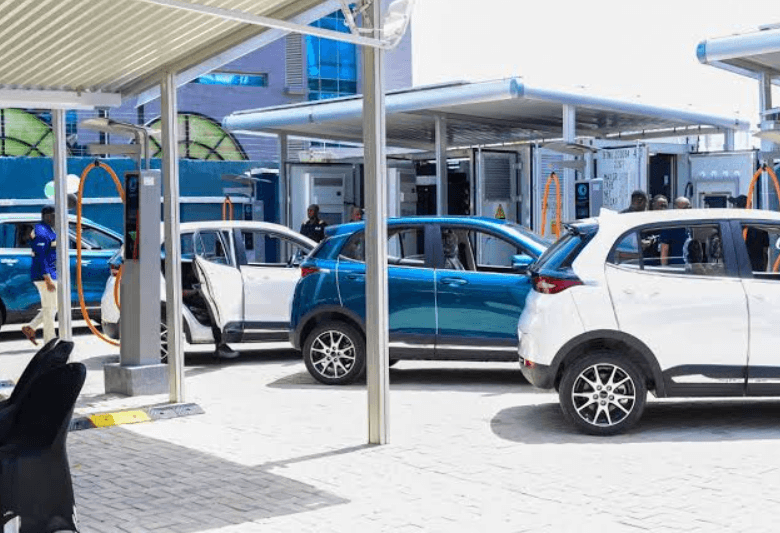

For years, electric vehicles in Nigeria felt like something we only read about in foreign tech news.
Now, that story is starting to look different.
This week, the Federal Government confirmed that the first batch of electric vehicles (EVs) promised to civil servants has arrived. While the number of vehicles involved has not been publicly disclosed, the delivery marks one of the clearest signs yet that Nigeria is moving beyond policy discussions and into actual EV adoption.
But for many Nigerians, the bigger question is simple:
Will electric vehicles and CNG-powered transport finally make commuting cheaper?
The Government’s New Transportation Plan
According to officials from the National Automotive Design and Development Council (NADDC), the arrival of the first EV batch is part of a broader plan to reduce transportation costs and encourage cleaner energy across the country.
The move comes as President Bola Tinubu and state governors continue discussions around using both electric vehicles and compressed natural gas (CNG) solutions to lower transport fares.
Transportation has become one of the biggest monthly expenses for many Nigerians since fuel prices increased. For workers who travel long distances daily, transport costs now consume a significant part of their income.
That reality is one reason the government appears determined to push alternative transportation systems faster than before.
Why This Matters More Than Just Civil Servants
At first glance, some people may see this as a government worker benefit.
But the bigger picture is much more interesting.
Most major technology shifts start with institutional adoption before reaching the wider public.
Governments buy first.
Businesses follow.
Consumers eventually benefit.
If the government successfully deploys electric vehicles and alternative-fuel transportation systems, private companies may become more confident investing in the same ecosystem.
That means more charging stations, more EV dealerships, more maintenance centers, and eventually more vehicle choices for everyday Nigerians.
EV Infrastructure Is Expanding Quietly
One of the biggest challenges facing electric vehicles in Nigeria has always been infrastructure.
Buying an EV is one thing.
Charging and maintaining it is another.
To address this, government officials revealed that EV infrastructure has already been deployed in about 16 Nigerian universities.
This may not sound exciting today, but it could become important in the coming years.
Universities often serve as testing grounds for new technologies. By introducing charging infrastructure and EV-related facilities within campuses, Nigeria is gradually building a workforce that understands the technology behind electric transportation.
Private Companies Are Seeing an Opportunity
Interestingly, it is not only the government that is moving.
Private companies are beginning to position themselves for what could become Nigeria’s next automotive shift.
Several firms are expanding EV support services, including maintenance centers and dedicated service stations.
Companies are also exploring solar-powered charging solutions to reduce dependence on the national grid.
This approach may end up becoming one of Nigeria’s biggest advantages.
Instead of relying entirely on traditional electricity infrastructure, businesses are experimenting with decentralized solar systems that can support EV charging independently.
The Tax Incentives Could Change Everything
Perhaps the biggest development flying under the radar is the government’s decision to remove import duties and VAT on fully electric and CNG vehicles.
This is a major signal.
Governments usually introduce such incentives when they want to accelerate adoption of a particular technology.
Lower taxes mean lower import costs.
Lower import costs can eventually translate into more affordable vehicle prices.
While EVs remain expensive for many Nigerians today, tax waivers could gradually make them more accessible as more models enter the market.
Reports indicate that thousands of EV-related tax waiver approvals have already been recorded this year.
That suggests interest in the sector is growing much faster than many people realize.
Nigeria’s Long-Term EV Goal
Nigeria’s Energy Transition Plan has an ambitious target.
The goal is for electric vehicles to make up a large portion of the country’s vehicle fleet by 2050.
At the moment, EV adoption remains very small.
However, every major technology follows a similar pattern.
Adoption looks slow.
Infrastructure expands.
Costs fall.
Then growth accelerates.
We’ve seen this happen with smartphones, mobile internet, fintech services, and solar energy.
The question now is whether electric transportation will follow the same path.
The Opportunity Many Nigerians May Be Missing
From a technology and business perspective, this story is not just about cars.
It is about an emerging industry.
As Nigeria invests in EVs and CNG transportation, new opportunities could emerge in:
- EV charging services
- Vehicle maintenance and repairs
- Solar-powered charging stations
- Battery technology
- Fleet management
- Ride-hailing services
- Auto financing
- EV content creation and education
The companies that position themselves early could benefit the most if adoption continues to grow.
The Real Test Starts Now
The arrival of the first electric vehicles for civil servants is an important milestone, but it is only the beginning.
The real test will be whether infrastructure expands quickly enough, whether transport operators pass cost savings on to commuters, and whether Nigerians begin to see practical benefits in their daily lives.
For now, one thing is becoming clear.
Electric vehicles are no longer a future conversation in Nigeria.
They are gradually becoming part of the country’s transportation reality.
And if government plans, private-sector investments, and tax incentives continue moving in the same direction, the next few years could be some of the most important years yet for Nigeria’s automotive and energy sectors.








Leave a comment