


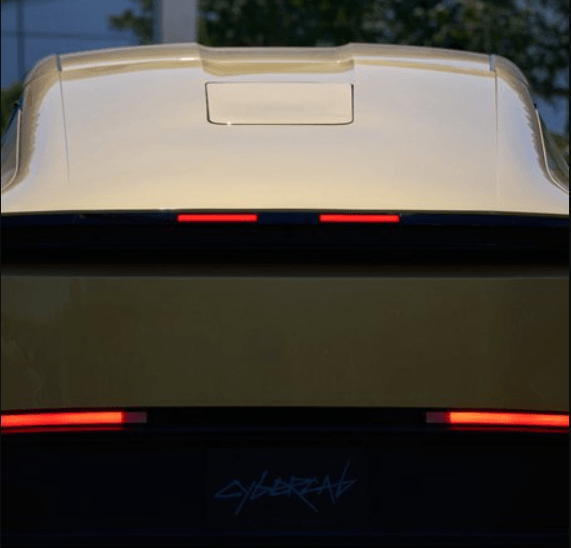
Tesla has shown the first Cybercab with Starlink built directly into the vehicle, and honestly, this is one of those moves that makes more sense when you think about how Tesla wants its robotaxis to work.
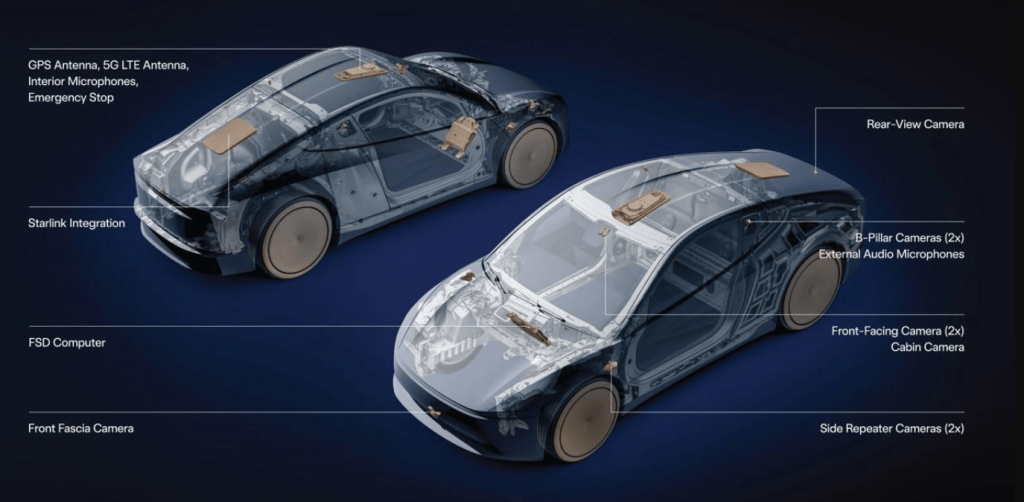
The company recently shared photos of a Cybercab fitted with an integrated Starlink antenna. Instead of having the familiar Starlink hardware sitting on top of the vehicle, the setup is hidden inside the rear section of the car.
That is a pretty clean way to do it.
Why does a self-driving car need Starlink?
This is the first question that came to my mind.
A Cybercab will already have mobile network connectivity, so adding satellite internet could look unnecessary, especially when these cars are expected to operate in cities where 4G and 5G networks are widely available.
But Tesla’s argument is simple: a robotaxi needs to stay connected as much as possible.
There can be places where mobile coverage becomes weak or disappears completely. For a normal car, that might not be a big deal. For a vehicle that is supposed to operate without a human driver, reliable communication becomes much more important.
Tesla says Starlink can help keep the vehicle connected in areas where cellular networks are unavailable.
That could be useful for things such as navigation, customer support and managing a large fleet of robotaxis.
Elon Musk wants Starlink in more cars
Tesla CEO Elon Musk has also made it clear that he sees this as something bigger than the Cybercab.
He has suggested that Starlink could eventually become part of cars more generally because the number of connected vehicles is expected to grow significantly.
He argues that future cars will need to handle much more data, especially as artificial intelligence becomes a bigger part of transportation.
And I can understand the thinking.
Imagine millions of cars constantly communicating, receiving updates, sending information and using online services. Cellular networks will have to handle a huge amount of traffic.
Satellite connectivity could give Tesla another way to keep its vehicles online.
This isn’t only about watching Netflix
There has also been talk about using Starlink to provide fast internet for passengers.
Tesla has previously promoted the idea of passengers being able to stream high-quality video while a Cybercab handles the driving.
That sounds nice, but personally, I think the more important use is the less exciting one: keeping the vehicle connected.
For a robotaxi business, losing connectivity in the wrong location could create problems for fleet operators and passengers.
That doesn’t mean the Cybercab suddenly becomes unsafe without Starlink. Tesla’s AI chief has indicated that the satellite connection isn’t required for the vehicle to operate safely.
Instead, it appears to be an additional connection that can help with services around the vehicle.
The interesting part is what happens next
What I find most interesting is that Tesla isn’t treating Starlink as just another optional gadget.
Musk has talked about putting Starlink connectivity into more Tesla vehicles in the future, at least in places where the service is available.
If that happens, the relationship between Tesla and SpaceX becomes even more interesting.
Both companies already operate in very different areas, but they increasingly touch the same technology themes: AI, connectivity, autonomous vehicles and large amounts of computing.
For now, though, the Cybercab is the clearest example of what Tesla is trying to achieve.
My take
I don’t think Starlink in a Cybercab is simply about giving passengers faster internet.
I see it more as Tesla building a backup connection for a future where cars are expected to remain online almost all the time.
A normal driver can pull over when something goes wrong with connectivity. A robotaxi doesn’t have that luxury in quite the same way.
So, while putting satellite connectivity into a city-focused taxi may look strange at first, I can see the logic behind it.
The bigger question for me is whether Tesla will eventually make satellite connectivity a normal feature across its entire vehicle lineup.
If that happens, this first Cybercab could end up looking less like an experiment and more like the beginning of a much bigger change in how cars stay connected.


Leave a comment