



PesaLink is pressing Kenyan banks to make smaller transfers free and charge a flat KES20 on larger payments, but the network cannot impose a single retail price. For customers, that means a cheaper payment rail and a cheaper bank transfer are not automatically the same thing.
In an interview published by TechCabal today, chief executive Gituku Kirika described the network’s push for broader adoption and lower costs. The discussion also covered merchant payments and connections beyond traditional bank accounts.
PesaLink’s own customer guidance makes the pricing distinction explicit: charges vary between banks, and customers should ask their bank for the applicable fee. That is the most useful starting point for anyone comparing a proposed flat price with the amount shown in their banking app.
Table of Contents
The PesaLink fee proposal is not a universal tariff
The model described in TechCabal’s report is free transfers of KES1,000 or less and a KES20 charge for larger transfers up to KES999,999. The publication reports adoption by some banks, while others continue to use tiered charges. Kirika’s expectation of wider adoption is a forecast, not a completed change across the market.
That distinction matters for a customer reading a headline and then opening an app. PesaLink can encourage a pricing model while the institution serving the customer still determines what appears at checkout.
A flat price can make a transfer easier to budget because the charge does not rise with each amount band. But an advertised price should still be checked against the actual sending account, the selected service and any other applicable conditions.
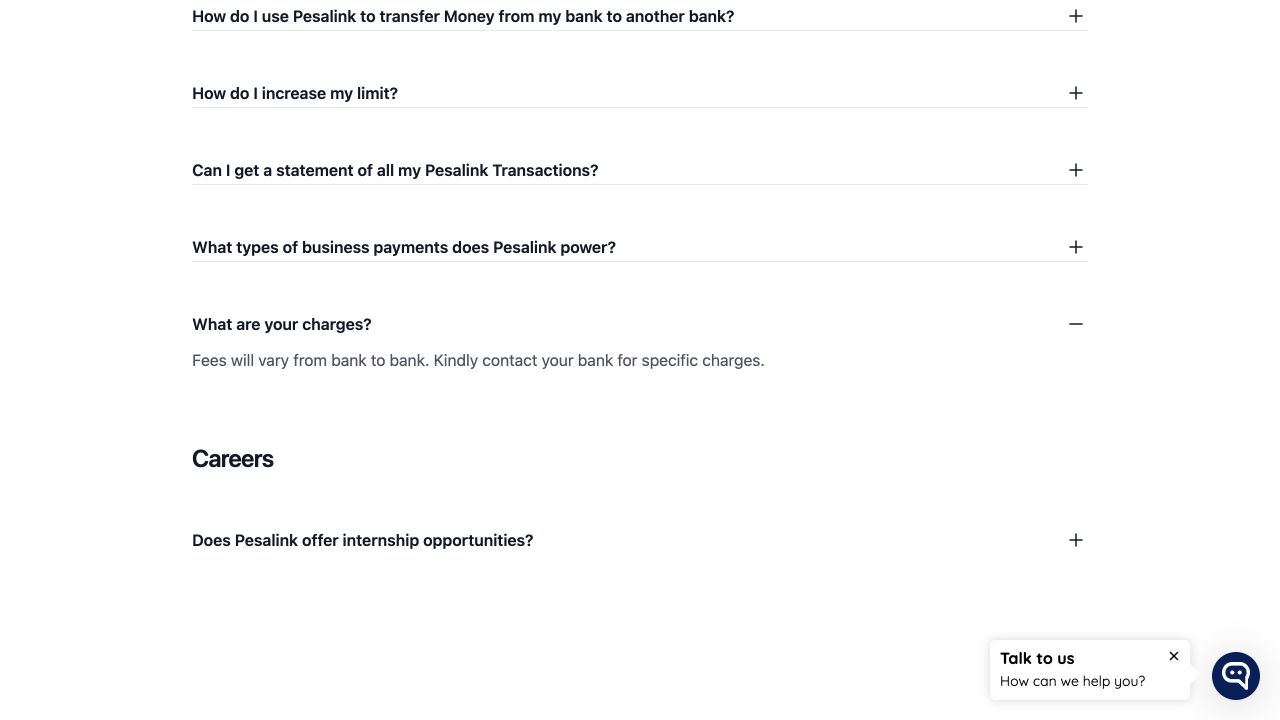
For PesaLink users, the strongest evidence is the current fee disclosure presented by their own bank before confirmation. A screenshot from another institution may accurately show that institution’s offer without describing the user’s account.
The same caution applies to an old tariff shared in a messaging group. Fees and eligibility can change. A report about the direction of pricing is useful news, but it is not a replacement for the bank’s current tariff or transaction confirmation screen.

Who operates PesaLink and how the network works
PesaLink’s official FAQ identifies Integrated Payment Services Limited as the operator and the Kenya Bankers Association as owner. It describes an interoperable network connecting stores of value, including bank accounts, mobile money, SACCOs and fintech wallets.
The FAQ lists transfers up to KES999,999 through supported channels such as bank apps, online banking and USSD. That network-level description does not mean every customer can send the maximum amount through every channel. Individual account limits and institution controls can still apply.
An interoperable network helps different providers exchange payments without making customers stay entirely inside one provider’s ecosystem. For the payer, the important outcome is whether money can reach the intended recipient in a form they can use.
The PesaLink retail experience still depends on the participating institution. A bank decides how PesaLink appears in its app, what instructions a customer sees and how support is provided. The PesaLink infrastructure and the visible customer journey are connected, but they are not identical.
This helps explain the apparent contradiction in the PesaLink story. A bank-owned payments network can advocate lower costs while leaving customer pricing to the banks. Ownership does not, by itself, make all participants adopt the same commercial decision.
Compare complete payment journeys rather than isolated charges
A price comparison is strongest when the sender starts with the same source of funds and the recipient ends with the same usable result. Comparing a bank transfer with a wallet transfer can become misleading if one example leaves out an extra movement needed before or after the payment.
For instance, a recipient who needs money in a particular account may face a different journey from someone paying a merchant directly. The relevant comparison includes those additional steps, not just the first visible send fee.
PesaLink is trying to make account-based payments useful in more situations. Its commercial challenge therefore extends beyond being inexpensive on a tariff sheet. People also need to recognise the option, trust the recipient confirmation and find it where they are already making a payment.
A familiar payment service can retain users as PesaLink competes even when another route looks cheaper. Habit, saved recipients, merchant acceptance and access to help all affect whether a person changes behaviour. Cost matters, but usability can decide whether the saving is realised.
This is also why a fee comparison should name the amount and the service being compared. A claim that one method is always cheaper is much harder to support than a documented comparison of two current quotations for the same payment.
Businesses making repeated PesaLink payments should consider the time required to identify and reconcile each transaction. A low fee loses some of its practical value when staff spend longer searching for references or resolving unclear statuses. Operational clarity belongs in the cost discussion.
Merchant payments move the discussion beyond transfers
Kirika told TechCabal that PesaLink’s person-to-merchant use case is live with Equity Bank and SBM at Quickmart. He also described the use of merchant identifiers or QR codes as part of expanding everyday acceptance. Those are statements from the interview, rather than a claim that every shop already accepts the service.
For a merchant, receiving a payment is only the beginning of the operational task. The business needs to match it to the correct sale, establish that the payment succeeded and handle a discrepancy without disrupting the queue.
An expansion into shops therefore needs a clear customer flow as well as a functioning network. Customers need to see the correct merchant name and amount; staff need a dependable way to identify the corresponding receipt.
This is where PesaLink’s broader interoperability ambition meets everyday retail. More connections are useful when they reduce the number of separate arrangements a merchant must maintain. They are less visible to shoppers if the payment option remains difficult to find or explain.
For Nigerian readers, the useful parallel is the distinction between payment infrastructure and merchant-facing terms. Tomzytec’s OPay–SunTrust report covers a different market and arrangement, but also shows why a partnership announcement needs practical customer details.
PesaLink’s Kenyan tariff proposal does not establish Nigerian bank transfer charges. The amounts in this article are Kenyan shillings, and the service scope should not be silently extended to another country.

Network growth figures need clear attribution
TechCabal reports PesaLink’s own figures of roughly KES4 billion in average daily payment value, KES110 billion monthly and a success rate of about 98%. These are company-reported measures. They should not be treated as Tomzytec’s independent performance test.
Transaction value is also different from transaction count. A small number of larger business transfers can contribute significant value without showing how often households use a network for everyday purchases.
Likewise, a reported success rate needs a definition and a measurement period before it becomes a useful comparison with another service. It does not mean a particular customer can assume their next payment will complete without checking the result.
For the individual user, a clear reference, an understandable status and a workable support route remain important. If a payment is pending or unclear, sending it again immediately can create a second problem. Check the institution’s guidance and the transaction record first.
The PesaLink interview also describes cross-border connections through PAPSS. A connection to a wider network does not remove the need to check a specific origin country, participating provider, currency and recipient requirement before attempting a transfer.
Questions to resolve before choosing a transfer route
Will every PesaLink transfer above KES1,000 cost KES20? Not necessarily. That is the flat model the operator is encouraging. The official FAQ says bank fees vary, so the current bank disclosure is what a customer should check.
Can every account send KES999,999? That is the network maximum described in the FAQ. A bank or channel can apply a lower customer limit. Check the account’s transaction settings and the bank’s process for changes.
Does a low fee mean the service is accepted everywhere? No. Acceptance depends on the participants, the recipient and the use case. A person-to-person transfer and a merchant checkout can have different flows.
Is this a recommendation to change banks? No. The report explains a current payments development. Account features, support, access and the total cost of the services a customer uses all matter beyond one transfer charge.
Final Thoughts
PesaLink’s effort to make instant transfers more affordable is a useful development for Kenya’s payments market. The important limit is that the operator recommends a price while banks decide what customers pay.
The practical response is to compare the current fee for the exact payment, confirm the recipient and keep the reference. Wider acceptance and consistent pricing could strengthen the service’s everyday appeal, but those outcomes need evidence beyond a network’s ambition. Images here illustrate mobile and merchant payments; they are not company executive portraits.






Leave a comment